

Gold Bonds vs Gold ETFs: Which Investment Wins For Indians?
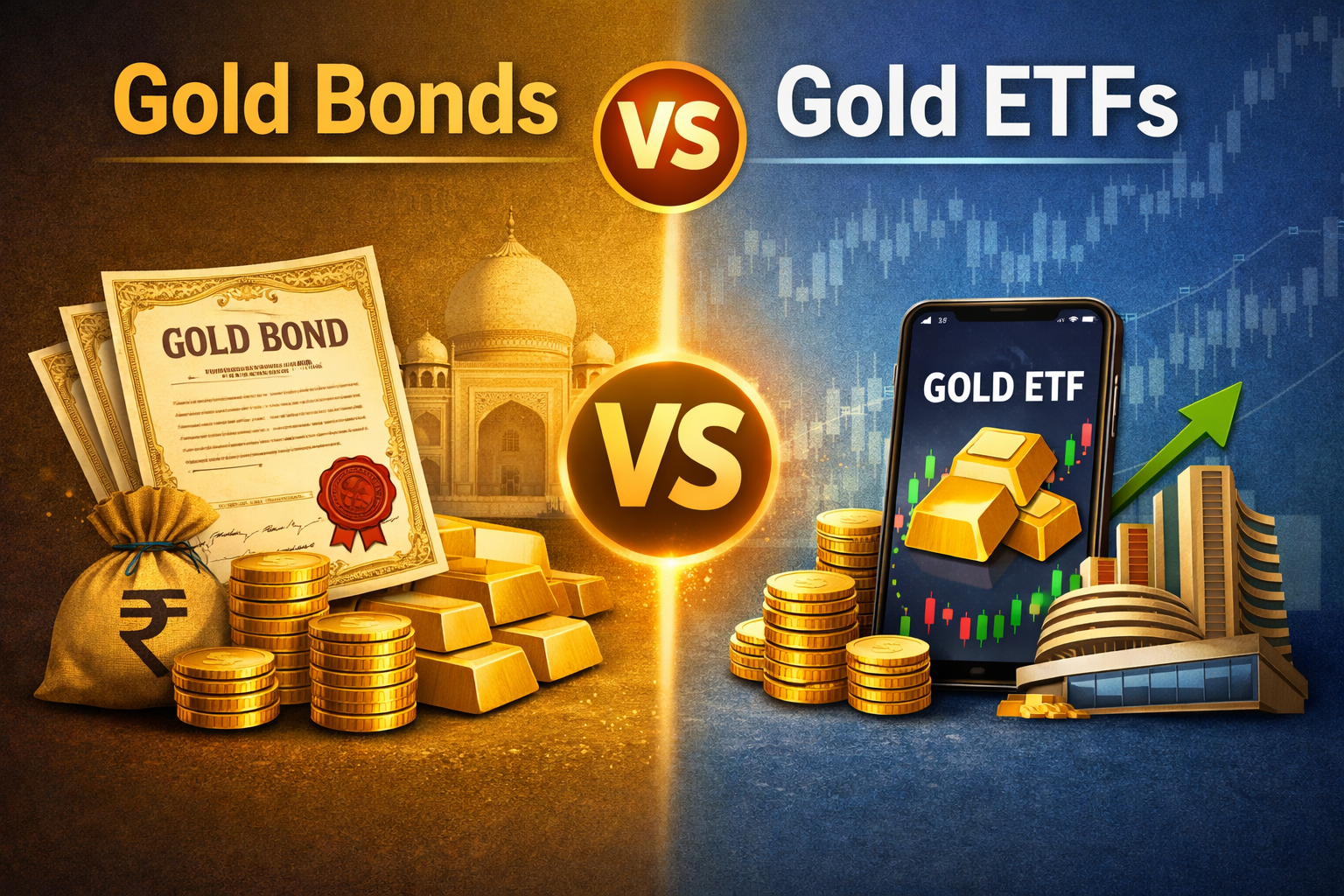
Consider a busy entrepreneur running a mid-sized manufacturing firm in Mumbai. Gold prices fluctuate with global events, and she needs a steady way to grow her savings without daily worries. She turns to gold investments, weighing options like gold bond vs gold ETF or sovereign gold bond vs gold ETF. Sovereign Gold Bonds (SGBs) are government-issued debt securities linked to gold prices, offering a fixed interest rate (the coupon rate) paid twice a year, with a set maturity date when the face value, linked to gold's value, is returned. Gold ETFs, on the other hand, are exchange-traded funds that track gold prices and trade like shares on stock exchanges.
In 2026, as Indian investors seek reliable growth amid economic shifts, the debate on SGB vs gold ETF or gold ETF vs sovereign gold bonds heats up. Both track gold's value but differ in structure and benefits. This onsite blog breaks it down for you, the investor eyeing bonds, with clear scenarios, comparisons, and insights to help you choose wisely.
What Are Sovereign Gold Bonds?
Think of a logistics company owner who wants gold exposure without storing physical bars in a vault. Sovereign Gold Bonds fit perfectly; they let you invest in gold through a simple bond.
SGBs are issued by the Reserve Bank of India on behalf of the government. Each bond represents a gram of gold, priced at the average closing gold rate over three days. You earn a coupon rate semi-annually, and at maturity (typically eight years), you receive the face value based on gold's market price at that time.
-
Government backing: Fully secure, as they're sovereign instruments.
-
Interest income: Regular payouts add a steady cash flow.
-
Tax perks: Long-term capital gains are exempt if held till maturity.
-
No physical storage: Avoid locker fees or purity concerns.
These features make SGBs a solid choice for patient investors looking to build wealth over time. SGBs blend gold's growth potential with bond-like reliability, ideal for your portfolio.
Understanding Gold ETFs
Picture a tech startup founder in Bangalore who trades shares actively and wants gold without lock-ins. Gold ETFs match this need, offering quick access like company stocks.
A Gold Exchange-Traded Fund (ETF) is a fund listed on stock exchanges that holds physical gold or gold-linked assets. Its price mirrors the daily gold rate, and you buy or sell units during market hours, just like equities.
-
High liquidity: Trade anytime the market is open.
-
Low entry point: Start with small amounts per unit.
-
Transparency: Net asset value (NAV) reflects real-time gold prices.
-
Expense ratio: Small annual fee covers management.
ETFs shine for investors who need flexibility in their investments. Gold ETFs bring gold's upside to your trading desk with ease and speed.
Key Differences: Gold Bond vs Gold ETF
When pitting gold bonds vs gold ETF, how do they stack up for your needs? Both rise with gold prices, but their paths diverge. Here's a side-by-side view:
|
Feature |
Sovereign Gold Bonds (SGBs) |
Gold ETFs |
|
Issuer |
Government (RBI) |
Asset management companies |
|
Interest |
Fixed coupon rate, paid twice yearly |
None. Purely price-based returns |
|
Trading |
Buy during issue windows; secondary market limited |
Daily on stock exchanges |
|
Maturity |
Fixed term (e.g., 8 years), early exit option after 5 years |
No maturity, sell anytime |
|
Storage |
Demat form, no physical handling |
Held in demat, tracks gold bullion |
|
Minimum Investment |
Typically higher per bond |
Lower per unit |
SGBs suit long-term holders valuing income; ETFs favour active traders seeking liquidity. Diplomatically, your choice hinges on whether you prioritise steady payouts or market agility.
This table clarifies why the sovereign gold bond vs gold ETF isn't one-size-fits-all, pick based on your business rhythm.
Benefits of Sovereign Gold Bonds for Indian Investors
Recall the manufacturing entrepreneur from earlier. She chooses SGBs for their blend of safety and returns, much like securing a government contract.
SGBs offer peace of mind with a sovereign guarantee and no default risk. The coupon rate provides predictable income, supplementing gold appreciation. At maturity, you redeem at the prevailing gold price, which is often higher. Plus, tax efficiency boosts net gains. Where available, investors may explore SGBs in the secondary market, subject to liquidity and pricing.
Bondbazaar makes buying SGBs seamless. As a SEBI-regulated OBPP with zero charges, no account opening, brokerage, or maintenance fees, you have access to over 8000 bonds, including GSecs and corporates. Bonds are held in demat form, with interest and principal credited directly to your account. Real-time trading and expert guidance from bond-market pros, partnered with Trust Group, simplify the process.
Advantages of Gold ETFs in 2026
Now, envision the tech founder scaling her startup. She picks Gold ETFs for their fit with fast-paced decisions, akin to pivoting on market trends.
ETFs deliver instant liquidity, and you can sell units mid-day if cash is needed. No fixed tenure means full control. They track gold spot prices closely, capturing upsides without storage hassles. Low costs keep more returns in your pocket.
For secondary trades, Bondbazaar shines again. Buy or sell bonds and ETFs effortlessly with automated digital tools and a physical service team, all at a click, with everything held in demat.
ETFs empower agile investors navigating 2025's dynamic markets.
Which One Wins for You? Scenarios to Decide
As the owner of a solar energy firm in Gujarat, you're allocating surplus funds. Does SGB vs gold ETF or gold ETF vs sovereign gold bonds align better?
-
Long-term savings focus: Go SGBs. Like locking in a multi-year supply deal, you get interest plus gold growth, perfect for retirement or expansion reserves.
-
Short-term flexibility: Choose ETFs. Similar to trading supplier contracts daily, you can exit at any time without penalties.
-
Income needs: SGBs win with coupons, steadily funding operational cash flows.
-
High liquidity priority: ETFs excel; ideal for quickly reinvesting in business opportunities.
-
Risk comfort: Both are low-risk via gold, but SGBs add government security for conservative plays.
In 2026, with India's gold demand rising, match your horizon, SGBs for hold-and-grow, ETFs for trade-and-move. Neither outshines universally; both enhance diversified portfolios.
Your scenario dictates the smarter path forward.
Conclusion
Whether gold bond vs gold ETF tips toward SGBs' stability or ETFs' speed. SGBs deliver income and safety; ETFs provide liquidity and ease. Assess your timeline, income needs, and trading style to decide.
Ready to invest in bonds? Head to Bondbazaar today, earn fixed returns up to 14% on bonds, trade instantly with zero fees, and tap a vast selection backed by experts.
Open your demat account now and secure your gold future. Your business deserves it.
Sovereign Gold Bond issuance and availability depend on government policy and market liquidity,
Must Read - What are Bonds: How They Work and How To Invest?
FAQs
1. Can I sell Sovereign Gold Bonds before maturity?
You can redeem SGBs early after 5 years from the issue date, or sell them anytime on exchanges, subject to liquidity.
2. Do Gold ETFs pay any interest?
No, returns come solely from changes in the gold price, unlike SGB coupon payments.
3. What's the minimum amount to invest in SGBs?
The minimum investment in SGBs is a few grams of gold equivalent, set per issue.
4. Are both options taxable the same way?
SGBs offer tax exemptions on long-term gains if held to maturity; Gold ETFs are taxed at the investor’s income tax slab rate, irrespective of holding period, under current tax rules.
5. How do global events affect SGBs and Gold ETFs?
Both track gold prices, so factors like inflation or geopolitics impact them similarly, providing a hedge.