

ESG Bonds: Meaning, Benefits and How to Invest
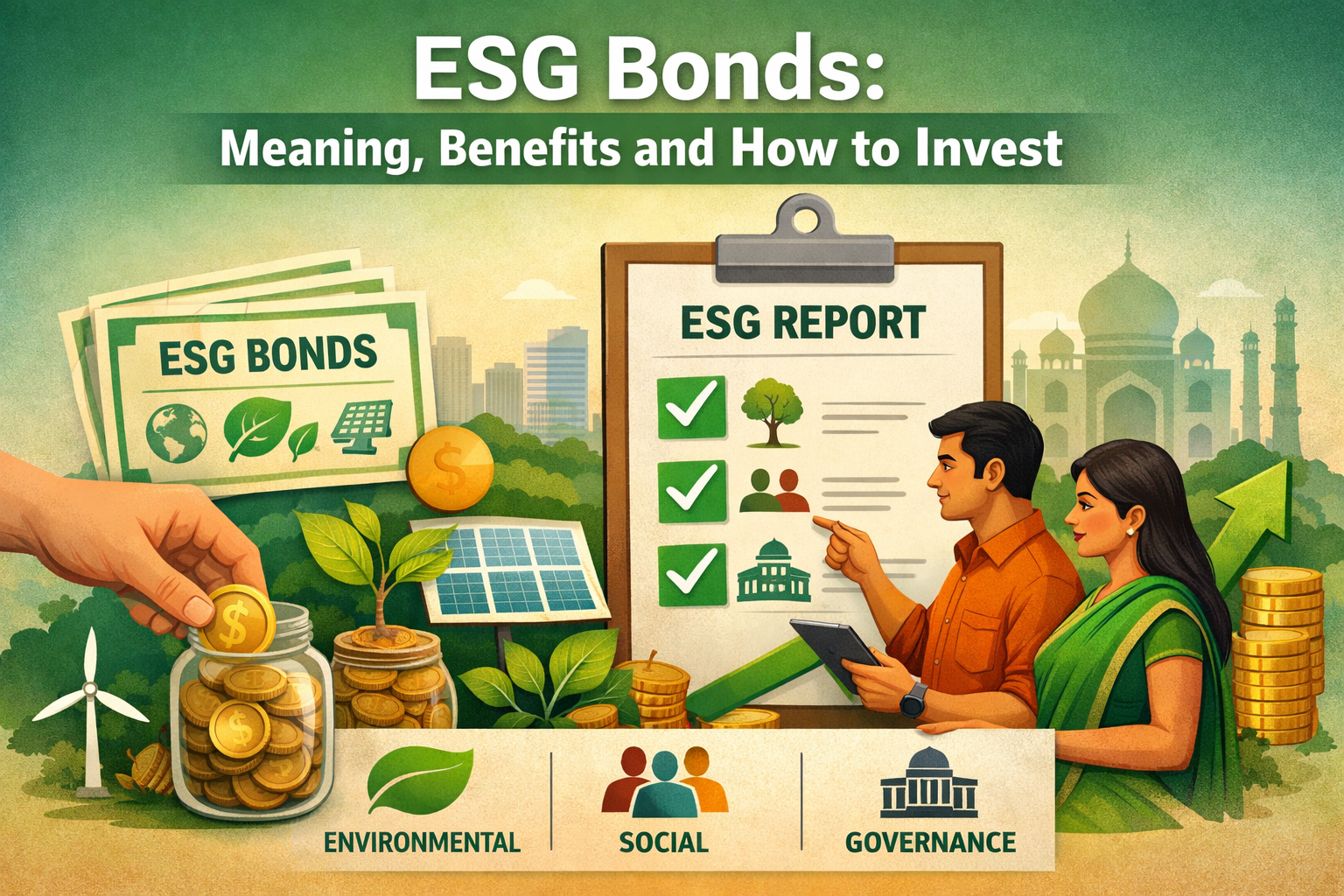
Consider a major energy company deciding to build a new wind farm. They need funds to cover the costs, so they issue bonds to attract investors. These bonds promise steady payments over time, with the full amount returned at the end. Now, take that a step further: what if those bonds also support projects that help the planet, communities, and strong business practices? That's where ESG bonds come in.
Bonds, at their core, are loans investors give to companies or governments. In return, receive regular interest payments, known as the coupon rate, until the maturity date, when the face value, the original amount, is paid back. ESG bonds build on this by focusing on environmental, social, and governance factors. They fund projects that make a positive impact while giving you a reliable income as an investor.
What Are ESG Bonds?
ESG bonds, or green and sustainability bonds, are debt instruments in which the raised capital is used exclusively for projects aligned with environmental goals (such as reducing emissions), social improvements (such as better worker conditions or community programs), or strong governance practices (such as transparent reporting). Issuers commit to tracking and reporting how funds are spent, often with third-party verification.
|
Aspect |
Focus Areas |
Example from Business |
|
Environmental (E) |
Clean energy, waste reduction, conservation |
A utility company funds electric vehicle charging stations. |
|
Social (S) |
Employee welfare, affordable housing, and education |
A bank supports low-cost loans for small businesses in underserved areas. |
|
Governance (G) |
Ethical leadership, anti-corruption, diversity |
A tech firm improves board diversity and data privacy measures. |
This structure ensures your money goes toward verifiable positive change, blending financial returns with purpose. ESG bonds offer a clear path for companies to grow responsibly, letting you invest with impact from day one.
Key Benefits of ESG Bonds
ESG bonds stand out for investors seeking more than just returns; they deliver purpose alongside stability.
- Stable Income Stream: Like traditional bonds, they provide fixed interest payments, ideal for planning your cash flow without market ups and downs.
- Positive Impact Tracking: Funds go to specific projects, with reports showing real results, such as tons of CO2 saved by a logistics company's electric fleet.
- Growing Demand: More companies issue them as consumers and regulators push for responsibility, potentially increasing bond values over time.
- Diversification Edge: They complement other holdings, spreading risk across sectors focused on long-term viability.
- Reputation Boost: Holding them signals your commitment to ethical investing and appeals to professional circles.
Compared to regular bonds, ESG versions add a layer of purpose without sacrificing core financial traits; both offer reliability, but ESG ties directly to forward-thinking goals. These bonds let you earn while supporting business practices that build a better future.
Common Myths About ESG Bonds
Ever hear whispers that ESG bonds might underperform or lack real oversight? Let's clear the air with facts so that you can invest with full confidence.
Many investors hesitate due to misconceptions, but understanding the truth helps you make informed choices.
- Myth: They offer lower returns than regular bonds.
Fact: Returns depend on the issuer's credit quality and market conditions, just like any bond. ESG focus doesn't inherently reduce yields. - Myth: Verification is just a formality.
Fact: Third-party auditors review fund use against strict standards, ensuring transparency beyond standard bond reporting. - Myth: Only for big institutions.
Fact: Retail investors can access them easily through digital platforms, with the same liquidity options. - Myth: Projects are too vague to track.
Fact: Detailed frameworks outline eligible uses upfront, with ongoing public disclosures.
These clarifications show ESG bonds hold up well under scrutiny, offering reliability equal to peers. Debunking these myths reveals ESG bonds as a solid, transparent choice for your portfolio.
How to Invest in ESG Bonds
Investing in ESG bonds is straightforward when done through a regulated platform.
Follow these steps:
- Open a Demat Account: Bonds are held digitally here, with interest and principal paid straight to your bank, no paperwork hassles.
- Research Options: Look for issuers with strong track records, like a telecom giant funding digital access in remote areas. Check ratings and project details.
- Choose Your Bond: Pick based on maturity, coupon rate, and ESG focus.
- Buy and Monitor: Purchase at a click, sell anytime too. Track payments and impact reports effortlessly.
Conclusion
ESG bonds merge financial sense with real-world goods, from wind farms to community health projects. As more businesses adopt them, they become a smart choice for steady, purposeful investing.
Sign up on Bondbazaar, browse thousands of options, and start building your balanced bond portfolio with confidence.
Your first investment could power tomorrow's progress.
FAQs
-
What makes ESG bonds different from regular bonds?
ESG bonds direct proceeds to specific environmental, social, or governance projects, with reporting to verify use, while regular bonds fund general operations.
-
Who issues ESG bonds?
Governments, banks, corporations, and multilateral organisations issue them to finance targeted initiatives like renewable energy or social housing.
-
Are ESG bonds safe for investors?
ESG Bonds carry risks similar to other bonds, are backed by the issuer's creditworthiness, and often come with strong transparency measures.
-
How do I know the funds are used properly?
Issuers provide regular reports, often audited by independent verifiers, detailing project outcomes such as reduced emissions.
-
Can I sell ESG bonds before maturity?
Yes, on secondary markets through platforms offering real-time trading, giving you liquidity when needed.